
Powering the next generation of EV superhubs across the UK through ICP and power infrastructure
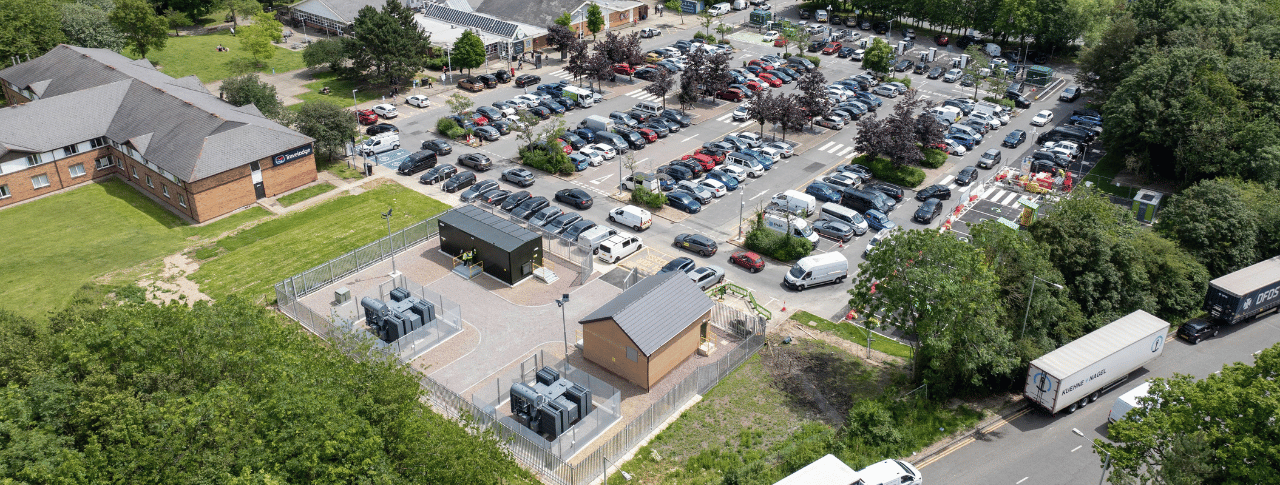
The UK’s transition to electrified transport is accelerating, with passenger vehicles, commercial fleets and heavy goods vehicles moving away from traditional fuels at pace. As EV adoption grows, charging infrastructure must scale rapidly to meet rising demand. Yet one critical constraint continues to shape large-scale EV deployment: power.
This challenge is particularly evident at EV superhubs, where high-power electrical infrastructure must support many ultra-rapid chargers serving multiple vehicle types simultaneously. At this scale, successful delivery requires far more than charger installation alone.
For charge point operators, fleet operators and logistics businesses, therefore, the challenge is no longer simply where chargers should be installed – but how to secure, manage and distribute sufficient power to make large-scale electrification commercially and operationally viable.
Actemium UK addressed this at its recent project at Moto Hospitality Tamworth, delivering the Independent Connection Provider (ICP) element and critical power infrastructure behind one of the UK’s most significant EV superhub developments to-date.
An end-to-end EV infrastructure solution
Actemium’s involvement at Tamworth began long before construction started, supporting early-stage feasibility, strategic planning and project development.
“From the outset, our team coordinated power supply with National Grid, investigated site constraints, as well as environmental considerations,” said Malcolm Hughes, Head of Development at Actemium E-Mobility.
Acting as Principal Contractor, Actemium then delivered the site’s complete electrical infrastructure, from initial design and full ICP scope through to energisation.
This required close coordination across multiple engineering disciplines, including high-voltage electrical design, protection systems, earthing, civils, structural works, transformer installation, commissioning and DNO/IDNO liaison.
By managing the project end-to-end, Actemium reduced complexity, maintained clear accountability, and ensured seamless delivery across the entire programme.
A step change in EV power provision
At the heart of the Tamworth development sits a dedicated 33 kV primary substation, one of the largest within a UK motorway services environment at present.
To support three simultaneous charging hubs – two for passenger vehicles and one for eHGVs – Actemium designed and delivered an electrical network capable of supplying 14 MVA of dedicated EV charging capacity.
The substation featured dual 33kV transformers stepping voltage down to 11 kV, with power distributed across four separate charging zones. Local substations then further reduced voltage for charger operation, creating a robust, integrated electrical network capable of powering all three hubs reliably from a single source.
“The successful delivery of 14 MVA of dedicated network capacity for EV charging at Tamworth marked a significant milestone for the sector,” explained Elena Gorman, Business Development & NERS Compliance Manager at Actemium E-Mobility. “Providing power at this scale within a live motorway environment is still relatively rare and requires a highly integrated approach to engineering, compliance, stakeholder management, and project delivery.”
Delivering within a live motorway services environment
Infrastructure at this scale demanded careful planning, close coordination and precise delivery within a complex live setting.
Construction took place within a fully operational motorway service station, where disruption to customers and business operations had to be minimised at all times.
Equipment deliveries required meticulous planning. Multi-tonne transformers and switchgear were installed using cranes, temporary roadways and tightly coordinated traffic management, all while maintaining customer access, parking, hotel activity, retail operations and vehicle movement across the site.
“We effectively built a primary substation and secondary HV electrical network in the middle of a live business while keeping that business fully operational,” said Elena.
This capability is becoming increasingly critical as electrification expands across motorway services, logistics depots and fleet hubs, where downtime carries significant commercial consequences.
Built for future growth
The infrastructure was designed not only for current demand, but for future expansion.
Spare capacity was built into both the 33 kV and 11 kV networks, enabling potential charging growth without substantial additional civil infrastructure investment.
This future-ready approach helps ensure the site can continue to scale alongside rising EV adoption and evolving vehicle requirements.
Trusted to deliver
“EV superhubs represent the next phase in UK e-mobility infrastructure,” Malcolm added. “As projects become larger, more complex and increasingly business-critical, clients need more than an EV installer. They need a trusted partner who can provide early advice, manage risk and deliver across the full project lifecycle.”
Moto Tamworth demonstrates what next-generation EV infrastructure demands from delivery partners: knowledge of networks, power expertise, multidisciplinary engineering capability and full project ownership.
From early stakeholder engagement and strategic advisory through design, construction, commissioning and energisation, Actemium delivered the complete ICP and EV deployment for a complex multi-hub charging development.
The result is resilient, scalable infrastructure built around customer needs and engineered to support the next phase of the UK’s electrified transport network.

Looking for a proven e-mobility infrastructure partner with a national reach?
Get in touch with our team today via reachout@actemium.co.uk.
Contact us