
Women in Engineering: Emily Hutton
For our final installment of Women in Engineering 2026, we caught up with Emily, an Apprentice Control Systems Engineer at Actemium Teesside. We spoke about how she got into engineering, what she’s been working on so far, and why she’d encourage more young women to consider the industry. From learning PCS 7 to growing confidence on live projects, Emily gives a great insight into what it’s like to start an engineering career through an apprenticeship.
Hi Emily, thanks for speaking with us. To start with, can you tell us a bit about your role and how you got into engineering?
I’m an Apprentice Control Systems Engineer and I’ve been with Actemium for around two and a half years now. I joined at 17, and since then I’ve built up a lot of experience working with Siemens PCS 7 software.
As far as I can remember I’ve always wanted to be an engineer. My great-grandma was an engineer in the RAF, so that was a big inspiration for me growing up. I also studied engineering at school and then went on to an engineering college. It helped me to realise that an apprenticeship was the right route for me because I wanted to learn by doing – rather than sitting in lectures full-time.
So, what sort of automation projects have you been involved in so far?
Most of my work so far has been in the chemical sector, where I’ve supported a mix of upgrades and new installations. Modernising older systems to newer versions so they stay secure and up to date is a major part of what we do in our business unit – but I’m also currently participating in a from-scratch project for a chemical client, which has been really exciting!
Since joining Actemium I’ve mainly specialised in PCS 7, which has helped me build up strong knowledge and confidence in the software.
What was it like starting in an engineering business as a young woman?
It was definitely a bit intimidating at first.
I joined as a 17-year-old apprentice in a very experienced team, and being the only female engineer in the office did make me wonder what it would be like. But that feeling didn’t last long. Everyone was really supportive and willing to help, and that made a huge difference. I’ve never felt held back.
Instead, I’ve been given the chance to learn, grow and take on responsibility, which has really helped build my confidence.
What achievement are you most proud of, Emily?
One of the things I’m most proud of is a project where I set up a PC configuration from start to finish. It was something I hadn’t done before, and there wasn’t any documentation available to follow, so I had to figure it out myself.
By the end of it, I had not only completed the work and the testing on my own, but I’d also developed a standard document that others can use in the future.
Knowing I’d produced something that will help the wider team as well as the project itself felt like a real milestone for me.
Sounds fantastic. What do you think is the next step in your career?
I’m hoping to complete my apprenticeship soon and then start my degree in September, which I’m really looking forward to. Longer term, I’d love to keep building my expertise in PCS 7 and become someone who can really lead in that area.
My goal is to become a true specialist in the software and, eventually, to be able to pass that knowledge on to others.
I’m also keen to gain more experience on the hardware side so I can broaden my understanding even further.
What would you say to other young women thinking about a career in engineering?
I’d say go for it. Engineering has so many different paths, and there’s a discipline to suit all kinds of interests and strengths.
For me, systems engineering turned out to be the perfect fit, even though it wasn’t something I knew much about when I was younger. If it’s something you’re interested in, don’t let outdated perceptions put you off. It’s a really rewarding career, and there’s nothing to stop women succeeding in it.
And finally, what qualities do you think make a good engineer?
Resilience is a big one. Engineering can be challenging, and things don’t always work first time, but that’s part of what makes it so rewarding.
You have to keep going, keep learning, and keep solving problems. When everything finally comes together and you see something you’ve helped create working in the real world, it makes all the hard work worth it.
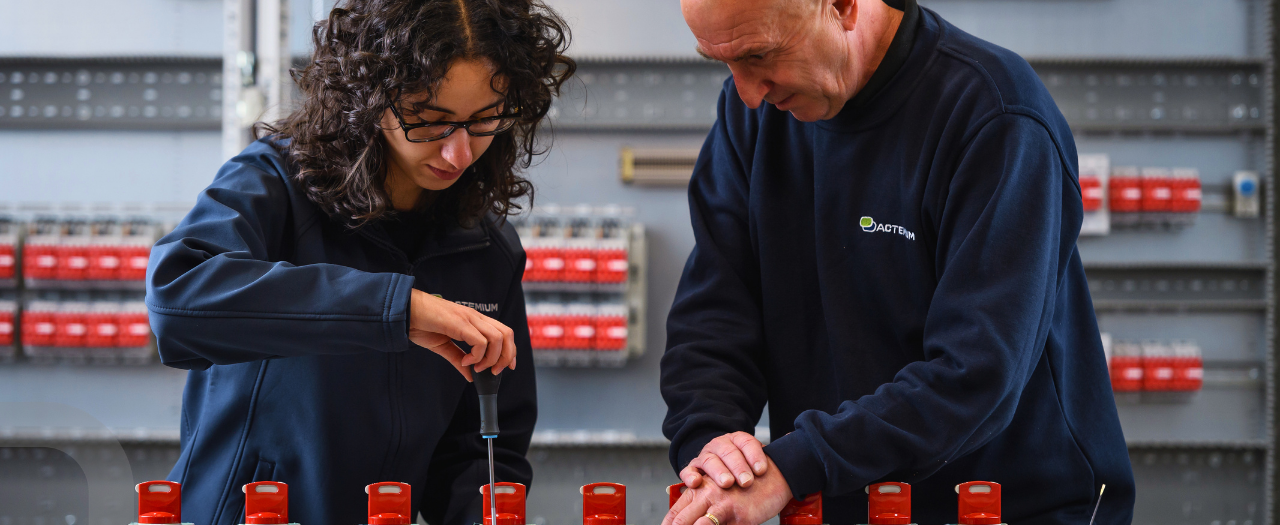
Interested in a career where you can solve complex challenges, keep learning and make a real impact?
At Actemium, we're committed to developing the next generation of engineers through hands-on experience, mentoring and meaningful projects across industry, infrastructure and more.
Explore careers