Expert engineering design enhances nuclear waste processing at Sellafield
Working in close collaboration with the Sellafield Box Encapsulation Plant (BEP) Delivery Team, Actemium Design UK provided specialist engineering design services to help transform a legacy facility into a modern, integrated waste processing plant. By combining technical expertise with practical, buildable design solutions, Actemium Design UK supported delivery within a highly regulated, safety-critical environment while enabling safer and more reliable future operations.
Project summary:
- Sector: Nuclear decommissioning
- Location: Sellafield, Cumbria
- Client: Sellafield
- Expertise: Mechanical Engineering, Stress Analysis, CE&, Engineering, Functional Safety
- Scope: Detailed Design of Process Plant and Equipment (PP&E), Vendor Support in Manufacture
Benefits
- Integration of new mechanical, control and safety systems within a complex legacy nuclear facility.
- Improved operator safety through fully remote handling, control and recovery systems.
- Reduced delivery risk through rapid redesign of a critical waste import process.
- Compliance with BS EN 61508 and BS EN ISO 13849 functional safety requirements.
- Increased equipment reliability and maintainability for long-term waste processing operations.
- Detailed build-to-print engineering and vendor support enabling smooth transition to manufacture and deployment.
Client & requirements
Sellafield Ltd manages some of the UK’s most complex nuclear legacy facilities, playing a critical role in the safe decommissioning and long-term management of radioactive waste. As part of an ongoing programme, they required the reconfiguration of the Box Encapsulation Plant (BEP) – a legacy process facility – to support the safe receipt and treatment of Miscellaneous Beta Gamma Waste (MBGW) from multiple donor plants – including the Magnox Swarf Storage Silo (MSSS), First Generation Magnox Storage Pond (FGMSP) and Pile Fuel Storage Pond (PFSP).
The BEP process involves encapsulating waste within a specialised grout matrix to immobilise radioactive material, ensuring stability during handling and long-term storage. The encapsulated waste is then transferred into liners, placed into 3m³ storage boxes, and kept in an above-ground storage facility – a critical step in maintaining environmental and public safety.
The challenge
To enable this transformation, the project required the integration of new process systems within an existing, highly constrained and safety-critical environment. Key requirements included:
- Supported modifications and minor upgrades to existing mechanical handling equipment that could not be removed.
- Designing entirely new process and handling systems from first principles
- Implementing fully remote-operated, radiation-hardened robotic systems from commercially available options
- Ensuring compliance with modern safety, control and functional standards
- Integrating all systems within the Waste Treatment Cell (WTC) without disrupting legacy infrastructure
- Resolving a high-risk clean box import system where the existing conveyor concept proved unsuitable late in the design phase
Actemium Design UK – part of Actemium UK – was engaged to deliver the detailed mechanical and CE&I engineering design services for this project, ensuring a fully integrated, safe and compliant outcome.
The solution
To address these challenges, Actemium Design UK developed a comprehensive engineering strategy that combined new system design with the existing facility building fabric and infrastructure.
Working closely with Sellafield, the BEP Delivery Team (BEPDT) and equipment suppliers, the team produced detailed build-to-print engineering packages for both mechanical and CE&I systems to support manufacturing, installation and commissioning.
The design scope included:
- Shield & containment doors: full refurbishment designs, updated drive systems and new safety systems.
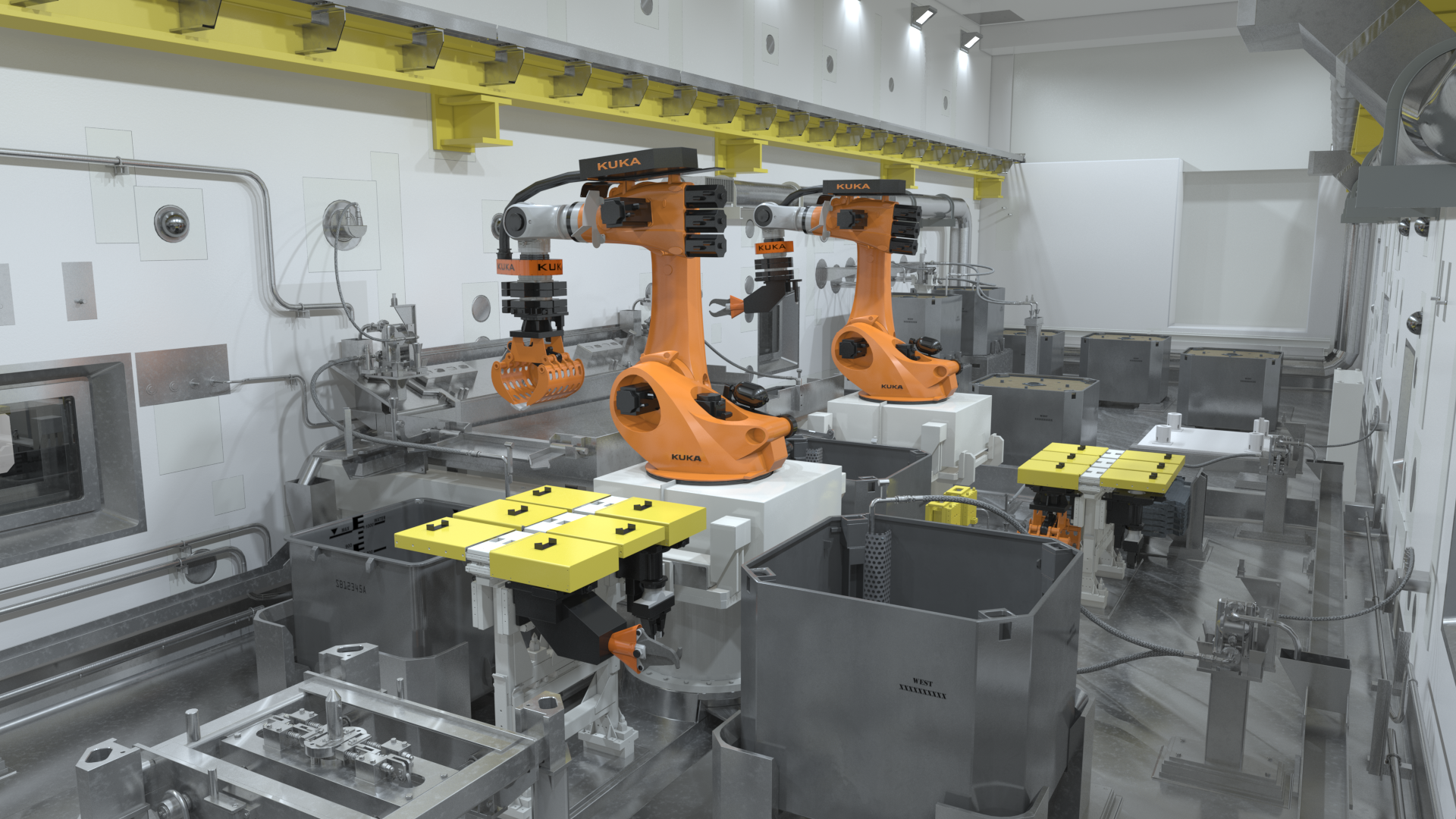
- Robotic waste-handling equipment: radiation-hardened solutions with remote-recovery capability
- Operator control rooms: ergonomic, fully remote operation ensuring worker safety.
- Grouting bogies and stations: transfer equipment to move waste packages to and from the grout plant within the facility.
- In-cell handling systems: crane interfaces and lifting tools enabling remote handling of waste packages.
- Personnel doors & emergency systems: upgraded safety measures and compliance with EN standards.
- Functional safety systems compliant to BS EN 61508 and machinery safety to BS EN ISO 13849.
As the plant equipment entered manufacturing, Actemium Design UK also provided ongoing technical support to vendors. This ensured it was manufactured in accordance with the approved design intent, allowing for seamless future integration.
A key example of Actemium Design UK’s value was its ability to respond quickly to a late-stage technical challenge affecting a critical front-end process. One of the most technically challenging aspects of the project involved the redesign of the clean box import system, a critical front-end process responsible for safely introducing six-tonne storage boxes into the facility for waste encapsulation and long-term storage.
Following an independent design review shortly before the final design gate, Actemium Design UK identified critical shortcomings in the existing conveyor-based concept, deeming it unsuitable for the required operational duty. Given the critical importance of the clean box import system and time sensitive nature of the project, the team tasked Actemium Design UK with identifying a solution. Working from first principles, the team rapidly developed a fully remote alternative using proven electromechanical bogie systems, rigid chain technology and ball transfer units.
Delivered from concept to manufacturing design in just nine months, the solution significantly reduced delivery risk while improving reliability, maintainability and operational safety.
Results & Benefits
Actemium Design UK’s engineering input helped convert a complex set of technical requirements into practical, buildable solutions for Sellafield, delivering specific outcomes across integration, safety, reliability and delivery risk:
- Integrated new process systems within a constrained legacy facility, enabling the Waste Treatment Cell to accommodate new mechanical handling, control and safety systems without compromising existing infrastructure.
- Reduced delivery risk on the clean box import route by replacing an unsuitable conveyor-based concept with a fully remote electromechanical solution developed from concept to manufacturing design in nine months.
- Improved operational safety and maintainability through remote operation, remote recovery capability and designs that reduced the need for personnel intervention in safety-critical areas.
- Strengthened compliance and assurance by aligning functional safety and machinery safety designs with applicable standards, including BS EN 61508 and BS EN ISO 13849.
- Supported successful transition into manufacture through detailed build-to-print engineering packages and ongoing vendor support, helping ensure equipment was manufactured in accordance with the approved design intent.