Engineering the future of port electrification

As UK ports accelerate their plans for decarbonisation, air quality improvement and compliance with evolving environmental regulations, investing in resilient electrical infrastructure has never been more important.

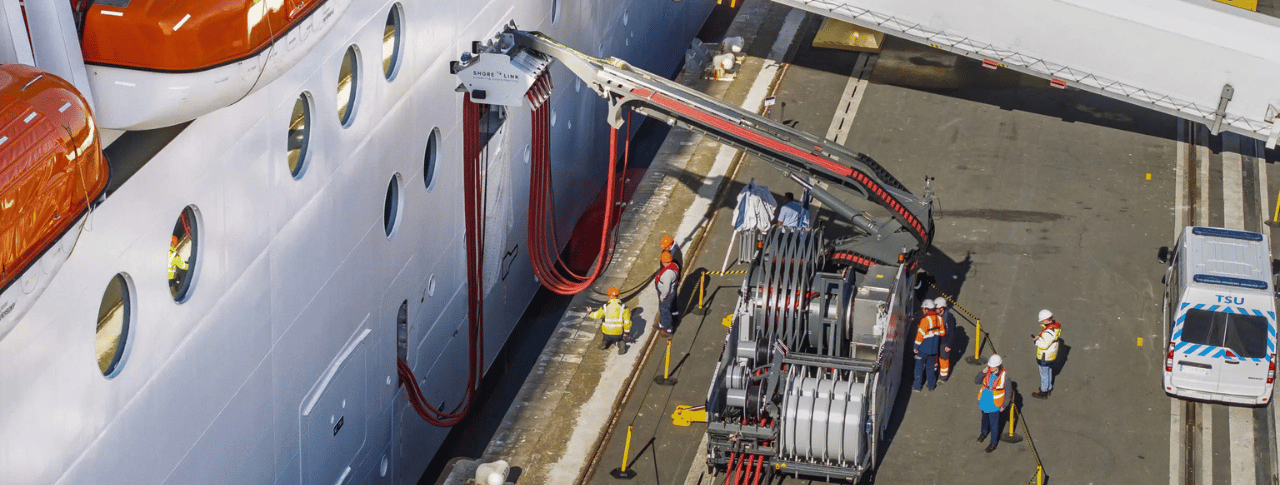
Actemium UK designs and delivers bespoke Onshore Power Supply (OPS) systems that enable vessels to switch off their auxiliary engines and connect to the local electricity network while berthed – helping ports reduce emissions, improve operational efficiency and create the electrical infrastructure needed to support future growth.

From early feasibility studies and business case development through to Front-End Engineering Design (FEED), installation, commissioning and long-term maintenance, we combine established UK engineering and delivery capability with Actemium’s international shore power experience to help ports, terminal operators, developers and the wider maritime sector plan and deliver their energy transition with confidence.

Why invest in OPS?

  • Meet vessel demand

    Support increasing numbers of shore-power-ready vessels calling at UK ports.

  • Reduce impact on the environment

    Cut emissions and noise at berth while improving local air quality.

  • Regulation
    Stay ahead of regulation

    Prepare for tightening environmental requirements and customer sustainability expectations.

  • Port Competitiveness
    Strengthen port competitiveness

    Make your port more attractive to operators already using or planning shore power.

  • Growth
    Build for future growth

    Create scalable electrical infrastructure that can expand with vessel demand and future power requirements.

Our OPS solutions in action

  • Port of Barcelona

    At the Port of Barcelona, Actemium designed and delivered a 4 MVA containerised high-voltage conversion station and safety automation system, enabling shore power for ferries across two quays while reducing emissions and noise at berth.

    Find out more
  • Port of Le Havre

    At HAROPA PORT Le Havre, a VINCI Energies and VINCI Construction consortium is delivering a €25 million high-voltage shore power system across three cruise berths, expected to cut around 15,000 tonnes of CO₂e emissions each year.

    Find out more
  • Port of Gothenburgh

    At the Port of Gothenburg, Actemium is delivering a turnkey OPS solution for tankers operating in ATEX hazardous areas, using three containerised systems designed to provide safe, sustainable shore power in a potentially explosive environment.

    Find out more

Need assistance with funding your shore power operations?

We can help you finance, manage and operate the OPS system infrastructure.

Full in-house expertise for your shore power project

Our multi-disciplinary teams handle the full project scope – from advise and design to build and maintain – including:

  • Assessment and planning

    • Feasibility studies
    • Business case development
    • Grid connection assessment
    • Utility coordination
  • OPS solution design

    • Front-End Engineering Design (FEED)
    • Electrical and mechanical engineering
    • Power quality and load management
    • Protection and control systems
  • Civils & infrastructure build

    • Grid connections and ICP
    • High Voltage (HV) and Low Voltage (LV) electrical infrastructure
    • Primary substations and power distribution
    • Civils and contruction
    • SCADA, automation and energy management systems
  • Commission and hand over

    • Installation and commissioning
    • System testing
    • Operator training
  • Maintenance and optimisation

    • Preventive maintenance
    • Lifecycle support
    • Ongoing system optimisation

Connect every ship, every time

Every port, berth and vessel has different requirements. As a vendor-agnostic OPS solutions provider, Actemium selects and integrates the right technology for each project, whether that is our own CMS or a third-party solution.

Actemium has developed its own bespoke CMS range to address supply-chain, availability and cost challenges, while maintaining long-standing relationships with leading CMS manufacturers. This gives customers flexibility to choose the most suitable solution for their operational needs.

  • Cruise CMS: Heavy-duty mobile solution for larger vessels
  • Ferry CMS: Compact solution for frequent connections
  • Container CMS: Linear quay-side system for container vessels


Have a shore-to-ship project in mind?

Get in touch with our experts today.

A trusted partner for port electrification

Actemium UK combines proven expertise in electrical engineering, automation, industrial power systems and infrastructure delivery with extensive international OPS experience across Europe.

As part of the global Actemium network, we bring established shore power best practice together with local engineering and delivery capability to help UK ports reduce project risk, accelerate electrification and deliver future-ready infrastructure.

Working with Actemium UK means benefiting from:

  • Proven expertise

    in complex electrical and OPS infrastructure

  • Bespoke, vendor-neutral solutions

    built around your operational requirements

  • End-to-end delivery

    from finance & feasibility to delivery and maintenance.

  • Dedicated project management

    with access to leading technology partners

  • Long-term support

    backed by trusted delivery across critical infrastructure sectors

Frequently Asked OPS Questions

  • What is Onshore Power Supply (OPS)?

    Onshore Power Supply (OPS), also known as shore-to-ship power, cold ironing, shore power or Alternative Maritime Power (AMP), enables vessels to switch off their onboard diesel generators and connect to the local electricity grid while berthed.

    By supplying electrical power from the shore, OPS reduces emissions, noise and fuel consumption, helping ports, terminals and vessel operators improve environmental performance while supporting wider port electrification strategies.

  • What is cold ironing?

    Cold ironing is another term for Onshore Power Supply (OPS). It refers to the process of providing electrical power from the shore to a vessel while it is alongside, allowing auxiliary engines to be shut down.

    The term originated when steam-powered ships allowed their iron engines to cool while connected to an external power source. Today, cold ironing is widely used to describe modern shore power systems.

  • Is there a difference between shore power, shore-to-ship power, OPS and Alternative Maritime Power?

    These terms are often used interchangeably.

    • Onshore Power Supply (OPS) is the most commonly used term in Europe.
    • Shore power is a general industry term.
    • Shore-to-ship power describes the physical transfer of electricity from shore to vessel.
    • Alternative Maritime Power (AMP) is widely used in North America.
    • Cold ironing is the traditional term still commonly used throughout the maritime industry.

    Although the terminology differs, they all refer to supplying electrical power from the shore to vessels while alongside.

  • Why are ports across the globe investing in Onshore Power Supply?

    Ports are investing in OPS as part of wider port electrification programmes to reduce emissions, improve local air quality and prepare for future environmental regulations.

    Shore power can also help ports:

    • Support customers’ decarbonisation objectives.
    • Improve air quality for neighbouring communities.
    • Reduce vessel noise while alongside.
    • Enhance competitiveness by attracting compatible vessels.
    • Prepare for future legislation and international environmental standards.
    • Demonstrate ESG and sustainability commitments.
    • Reduced fuel costs.
  • Can existing ports be retrofitted with shore power?

    Yes. Many ports can introduce OPS without major redevelopment.

    A feasibility study can determine:

    • Existing electrical capacity.
    • Additional power requirements.
    • Grid reinforcement needs.
    • Suitable berth locations.
    • Phased implementation options.
    • Future expansion opportunities.

    Retrofitting allows ports to introduce shore power as demand grows rather than delivering all infrastructure in a single phase. Actemium specialises in the containerised solution which reduces the impacts to the ports operations and business as usual.

  • What are the biggest challenges when delivering an OPS project?

    Every port is different. Successful projects require careful consideration of existing electrical infrastructure, available grid capacity, vessel power requirements and future growth.

    Common challenges include:

    • Grid connection capacity.
    • High-voltage electrical infrastructure.
    • Existing port operations.
    • Multiple vessel types and power demands.
    • Space constraints.
    • Future expansion.
    • Integration with existing assets.
    • Regulatory compliance.

    Working with an experienced engineering partner early in the project helps reduce technical and commercial risk.

  • What engineering services are required for an OPS project?

    Delivering an effective shore power solution requires much more than installing connection equipment.

    A typical project may include:

    • Feasibility studies.
    • Business case development.
    • Front-End Engineering Design (FEED).
    • Grid connection studies.
    • High-voltage and low-voltage electrical design.
    • Primary and secondary substations.
    • Power distribution.
    • Protection and control systems.
    • Automation and monitoring.
    • Civil engineering.
    • Installation and commissioning.
    • Maintenance and lifecycle support.

    Actemium UK provides end-to-end engineering expertise, supporting customers from advice to maintenance and everything in between.

  • How does Onshore Power Supply support port electrification?

    OPS is often one of the first and most significant steps in a wider port electrification strategy.

    As ports electrify cranes, cargo handling equipment, vehicles and future hydrogen or battery-powered operations, electrical demand increases significantly. A well-planned OPS project can form part of a wider electrical infrastructure strategy that prepares ports for long-term growth and the transition to lower-carbon operations.

  • Why choose Actemium UK for an Onshore Power Supply project?

    Actemium UK combines specialist expertise in electrical engineering, automation, industrial power systems and complex infrastructure delivery to help ports successfully deliver Onshore Power Supply projects.

    Rather than supplying individual components, we work alongside customers throughout the project lifecycle, from early feasibility studies and Front-End Engineering Design (FEED) through to detailed design, construction, commissioning, maintenance and long-term asset support.

    Our bespoke engineering solutions are built around your operational requirements, helping you reduce project risk, modernise critical infrastructure and support the transition towards cleaner, more resilient ports. We specialise in the containerised OPS system in a box, minimal disruption to ports operations and the quick return to operational outputs.

Shore Power OPS

Ready to discuss your shore power project?

Contact